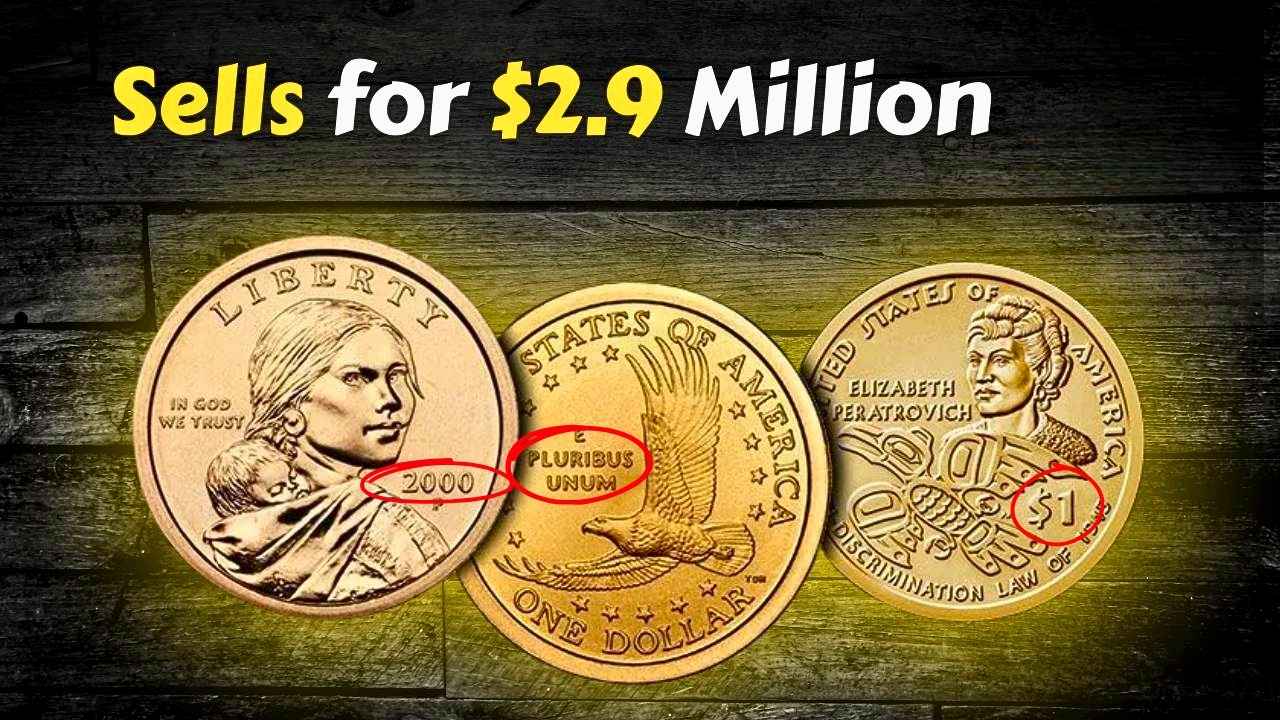
The Sacagawea Dollar, first issued in 2000, is one of the most distinctive coins in modern American numismatics. Featuring the Shoshone woman Sacagawea, who played a vital role in the Lewis and Clark expedition, the coin was designed to honor her contributions to American history. While most Sacagawea Dollars are common and circulate at face value, certain rare issues, including the famous 2.1 million coins tied to a unique minting event, have become highly valuable and sought after by collectors. This guide explores the history, rarity, and collector demand behind these coins, highlighting what makes them stand out in the numismatic world.
The Origins of the Sacagawea Dollar
The Sacagawea Dollar was introduced to replace the Susan B. Anthony Dollar, which had been unpopular due to its similarity in size and color to the quarter. The new coin was designed with a golden hue, achieved through a manganese-brass alloy, and a smooth edge to distinguish it from other denominations. Glenna Goodacre created the obverse design, featuring Sacagawea carrying her infant son, Jean Baptiste. The reverse, designed by Thomas D. Rogers, depicted a soaring eagle, symbolizing freedom and strength.
Why Sacagawea Dollars Are Collectible
Although billions of Sacagawea Dollars were minted, collectors are drawn to specific issues and varieties. Factors that influence value include limited mintage numbers, special editions, and unique minting errors. Coins tied to historical events or promotional releases often carry added significance. Condition also plays a major role, with uncirculated and proof examples commanding higher prices. For many collectors, Sacagawea Dollars represent both modern artistry and a tribute to Native American heritage.
The Famous 2.1 Million Sacagawea Dollars
In 2000, the U.S. Mint partnered with General Mills to promote the new dollar coin. As part of a marketing campaign, 2.1 million Sacagawea Dollars were distributed in Cheerios cereal boxes. These coins became known as “Cheerios Dollars.” What makes them extraordinary is that some of these coins featured a prototype reverse design with enhanced detail on the eagle’s tail feathers. This design was later modified for regular production, making the Cheerios Dollars a rare variety. Collectors quickly recognized their significance, and today they are among the most valuable Sacagawea Dollars.
Rare Varieties and Errors
Beyond the Cheerios Dollars, other rare Sacagawea varieties exist. The 2000-P Sacagawea Dollar struck on a Susan B. Anthony planchet is a notable error coin. Another famous issue is the 2000-W Sacagawea Dollar paired with a Washington Quarter, known as the “mule” coin. This accidental pairing of mismatched dies created one of the most spectacular modern minting errors. Only a handful of these mule coins are known, and they have sold for tens of thousands of dollars at auction. Such varieties highlight the unpredictability of minting and the excitement of discovering rare coins.
The Role of Condition and Grading
Condition is critical in determining the value of Sacagawea Dollars. Coins are graded on a scale from Poor to Mint State, with higher grades commanding higher prices. Professional grading services provide certification that assures authenticity and quality. For example, a Cheerios Dollar in average circulated condition might sell for a few hundred dollars, while one in Mint State can reach several thousand. Collectors often seek coins with sharp details, original luster, and minimal wear, making grading an essential part of the collecting process.

Collecting Sacagawea Dollars
Sacagawea Dollars appeal to both beginner and advanced collectors. Their modern design and historical significance make them accessible, while rare varieties provide challenges for experienced numismatists. Many collectors aim to build complete sets, covering all years and mint marks from 2000 onward. Others focus on key varieties such as the Cheerios Dollar or mule errors. Coin albums and folders designed for Sacagawea Dollars make collecting organized and enjoyable, while proof sets and special issues add depth to collections.
Investment Potential
Rare Sacagawea Dollars offer investment potential due to their scarcity and collector demand. While most coins in the series remain common, varieties like the Cheerios Dollar and mule errors have proven to appreciate in value over time. Their combination of rarity, historical significance, and modern appeal ensures lasting interest. However, investing in coins requires knowledge and patience. Market trends can fluctuate, and not every coin will increase in value. Collectors should focus on quality, rarity, and authenticity rather than speculation alone.
Modern Interest in Sacagawea Dollars
Even decades after their introduction, Sacagawea Dollars continue to capture public interest. Stories of rare varieties discovered in circulation or cereal boxes add to their mystique. Coin shows, auctions, and online marketplaces regularly feature Sacagawea Dollars, with collectors eager to add them to their collections. The enduring popularity of these coins demonstrates their lasting impact on American coinage and collector culture.
How to Identify Valuable Sacagawea Dollars
Identifying valuable Sacagawea Dollars requires careful examination. Start by checking the date and mint mark, as certain issues are rarer than others. Look for signs of minting errors, such as mismatched dies or unusual planchets. Assess the coin’s condition, noting wear, scratches, and luster. Consulting coin guides and price catalogs can provide insight into current market values. Joining collector communities or seeking advice from experienced numismatists can also help in identifying valuable coins.
Key Highlights
- Sacagawea Dollars were introduced in 2000 to replace the Susan B. Anthony Dollar
- The famous 2.1 million “Cheerios Dollars” feature a rare prototype reverse design
- Rare varieties include mule errors and coins struck on wrong planchets
- Condition and professional grading significantly impact coin values
- Collectors pursue complete sets, key varieties, and high-grade examples
- Rare Sacagawea Dollars offer both historical significance and investment potential
Final Words
Sacagawea Dollars are more than just modern coins; they are pieces of American history that continue to inspire collectors. From the rare Cheerios Dollars to the extraordinary mule errors, these coins tell stories of artistry, rarity, and innovation. Whether you are a beginner starting with common issues or an advanced collector chasing elusive varieties, Sacagawea Dollars offer a rewarding journey into numismatics. Their enduring popularity and potential for value make them a cornerstone of modern coin collecting, proving that even recent coins can hold great significance.