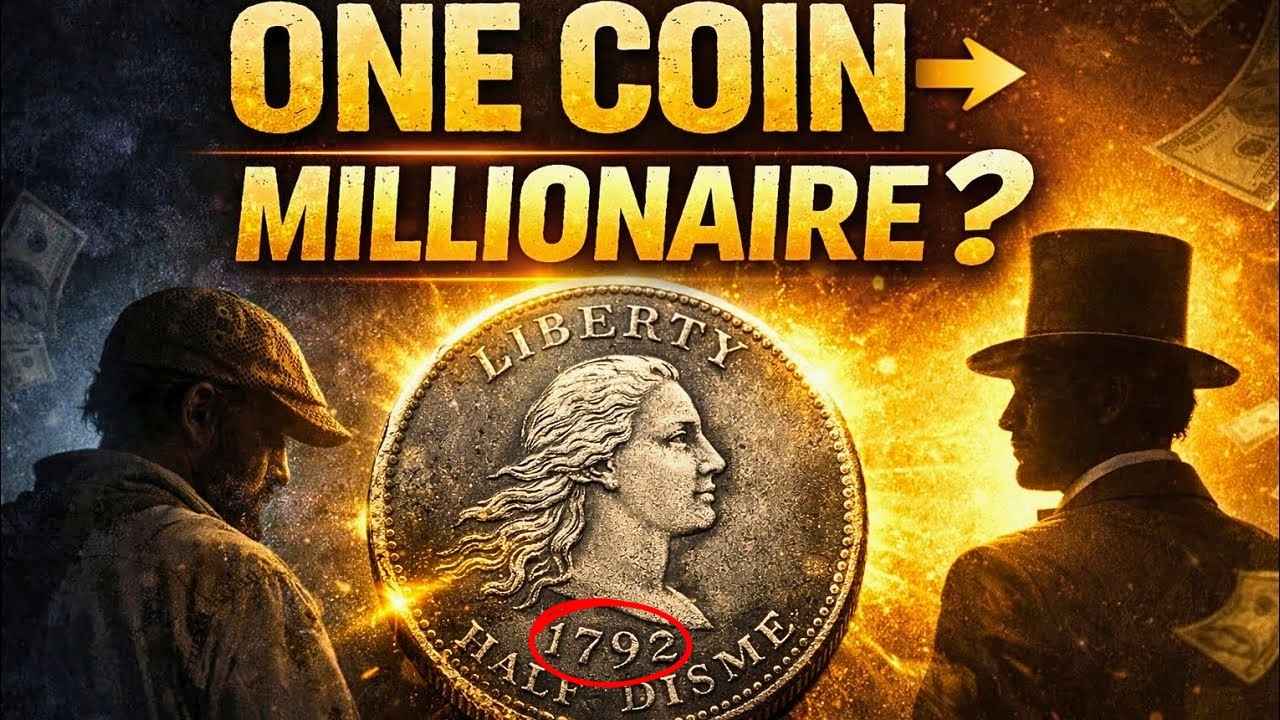
The 1792 Liberty Half Disme holds a special place in American numismatics as one of the earliest coins struck under the authority of the United States government. Small in size but immense in historical significance, this coin is often considered the foundation of U.S. coinage. Collectors prize it not only for its rarity but also for its connection to the formative years of the nation. Understanding its history, design, and value provides insight into why this coin continues to drive collector demand centuries after its creation.
The Historical Background
The Liberty Half Disme was minted in 1792, a year that marked the beginning of organized coinage in the United States. The Coinage Act of 1792 established the U.S. Mint, and the Half Disme was among the first coins produced. According to historical accounts, approximately 1,500 examples were struck in Philadelphia, possibly in the basement of a local building before the Mint itself was fully operational. These coins were authorized by President George Washington and are believed to have been distributed to dignitaries and used in circulation.
The Design of the Coin
The obverse of the 1792 Liberty Half Disme features a portrait of Liberty facing left, with flowing hair symbolizing freedom. The word “LIBERTY” appears above, and the date “1792” is inscribed below. The reverse depicts an eagle in flight, a powerful symbol of the young nation’s aspirations. The simplicity of the design reflects the limited resources available at the time, yet it captures the spirit of independence and progress. The artistry of the coin is admired by collectors who appreciate its role as a prototype for future U.S. coinage.
Rarity and Survival
Although 1,500 coins were reportedly struck, far fewer survive today. Many were lost, melted, or worn down through circulation. Estimates suggest that only a few hundred examples remain, with even fewer in high-grade condition. This scarcity makes the 1792 Liberty Half Disme one of the most coveted coins in American numismatics. Each surviving specimen is a tangible link to the nation’s earliest efforts at establishing a monetary system.
Collector Demand
The demand for the 1792 Liberty Half Disme is driven by its historical significance, rarity, and connection to the founding era of the United States. Collectors view it as a cornerstone piece, essential for any serious collection of early American coinage. Auction records show that these coins consistently attract strong bidding, with prices reaching into the hundreds of thousands of dollars depending on condition. The coin’s appeal extends beyond numismatics, drawing interest from historians and institutions that value its cultural importance.
Notable Auction Results
Over the years, the 1792 Liberty Half Disme has appeared in major auctions, often setting impressive records. Well-preserved examples have sold for amounts exceeding half a million dollars. Even coins in lower grades command significant premiums due to their rarity. These auction results highlight the enduring demand and the willingness of collectors to invest heavily in securing a piece of early American history.

The Role of Condition and Grading
Condition plays a crucial role in determining the value of the 1792 Liberty Half Disme. Coins are graded on a scale from Poor to Mint State, with higher grades commanding exponentially higher prices. Professional grading services provide certification that assures authenticity and quality. A coin with sharp details, minimal wear, and original surfaces can achieve extraordinary value. Even heavily circulated examples remain desirable due to their historical importance.
Historical Significance
Beyond its monetary value, the 1792 Liberty Half Disme represents the ideals of a young nation striving to establish its identity. It reflects the vision of leaders like George Washington and Thomas Jefferson, who recognized the importance of a stable currency system. The coin embodies the transition from colonial reliance on foreign currency to the creation of a uniquely American coinage. Its symbolism continues to resonate with collectors and historians alike.
Collecting Early American Coinage
For collectors, the 1792 Liberty Half Disme is part of a broader fascination with early American coinage. Coins from the late 18th century provide a window into the challenges and triumphs of the nation’s beginnings. Collectors often pursue related issues, such as the 1793 Chain Cent or the 1794 Flowing Hair Dollar, which also represent milestones in U.S. coinage. Together, these coins form a narrative of America’s journey toward financial independence.
Investment Potential
The investment potential of the 1792 Liberty Half Disme is significant due to its rarity and historical importance. While coin values can fluctuate with market trends, the enduring demand for this coin ensures long-term appreciation. Investors view it as a tangible asset that combines historical significance with scarcity. However, acquiring such a coin requires substantial resources, and buyers must prioritize authenticity and condition to maximize value.

Key Highlights
- The 1792 Liberty Half Disme is one of the first coins struck under U.S. authority
- Approximately 1,500 were minted, but only a few hundred survive today
- The coin features Liberty on the obverse and an eagle in flight on the reverse
- Collector demand is driven by rarity, historical significance, and cultural importance
- Auction results show values reaching hundreds of thousands of dollars
- Condition and professional grading greatly influence value
- The coin represents the ideals and vision of America’s founding leaders
Final Words
The 1792 Liberty Half Disme is more than just a coin; it is a symbol of America’s earliest steps toward establishing a national identity. Its rarity, artistry, and historical significance make it one of the most treasured pieces in numismatics. For collectors, owning a Liberty Half Disme is akin to holding a piece of the nation’s foundation. Whether admired for its design, valued for its scarcity, or cherished for its connection to history, this coin continues to inspire fascination and demand. Its legacy endures as a testament to the vision and determination of the United States in its formative years.