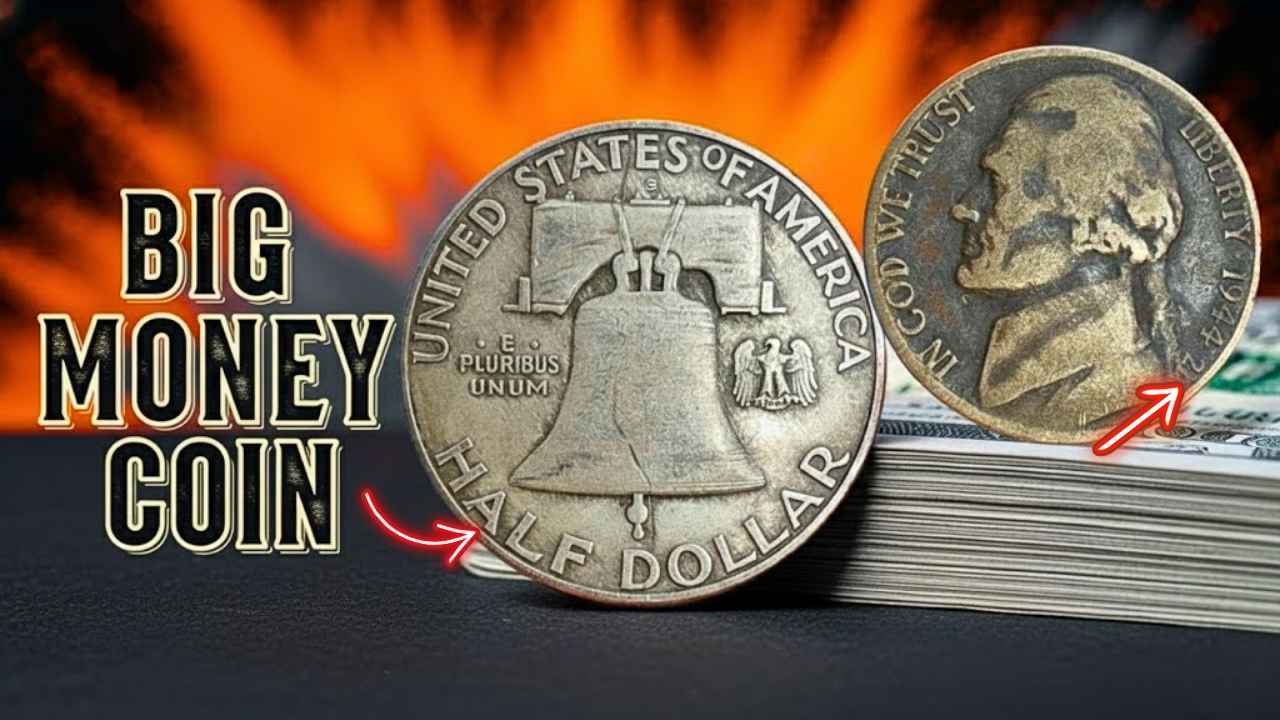
Coin collecting is a fascinating hobby that combines history, artistry, and the thrill of discovery. Among the many coins produced by the United States Mint, War Nickels and Franklin Half Dollars stand out as two series that continue to capture the attention of collectors. Both coins carry unique stories tied to American history, and certain rare examples can be worth far more than their face value. Understanding what makes these coins valuable requires a closer look at their origins, designs, and the factors that drive collector demand.
The Story of War Nickels
War Nickels were minted between 1942 and 1945 during World War II. At the time, nickel metal was a critical resource needed for military production, so the composition of the five-cent coin was changed. Instead of the usual 75 percent copper and 25 percent nickel, War Nickels were made of 56 percent copper, 35 percent silver, and 9 percent manganese. This change gave them a distinctive appearance and made them one of the few U.S. coins to contain silver outside of traditional silver denominations.
Collectors value War Nickels not only for their silver content but also for their historical significance. They represent a period when the nation adapted its currency to meet wartime needs. Each War Nickel can be identified by a large mint mark above the Monticello building on the reverse side, a feature unique to this series.
Rare and Valuable War Nickels
While all War Nickels contain silver, certain issues are more valuable due to rarity or condition. The 1942-P and 1942-S nickels are particularly sought after because they were the first in the series. Coins in uncirculated condition or with sharp details can command high prices. Error varieties, such as double die obverse nickels, are also prized by collectors. Because silver prices fluctuate, the intrinsic value of War Nickels rises and falls, but their historical importance ensures lasting demand.
The Franklin Half Dollar Series
The Franklin Half Dollar was introduced in 1948 and minted until 1963. Designed by John R. Sinnock, the coin features a portrait of Benjamin Franklin on the obverse and the Liberty Bell on the reverse. Franklin was chosen because of his role as a Founding Father and his contributions to science, politics, and philosophy. The Liberty Bell design further emphasizes themes of freedom and independence.
Franklin Half Dollars were the last U.S. half dollars struck entirely in 90 percent silver, making them attractive to both collectors and investors. They were eventually replaced by the Kennedy Half Dollar in 1964, following the assassination of President John F. Kennedy.
Rare and Valuable Franklin Half Dollars
Certain Franklin Half Dollars stand out for their rarity and value. The 1949-S issue is one of the scarcest in the series, especially in high grades. The 1955 Franklin Half Dollar is another key date, with relatively low mintage numbers. Collectors also seek coins with Full Bell Lines (FBL), a designation given to coins where the lines on the Liberty Bell are fully visible and sharply struck. FBL coins are significantly more valuable than those without this detail. Proof issues, particularly those from the early 1950s, are also highly collectible.
Factors That Influence Value
Several factors determine the value of War Nickels and Franklin Half Dollars. Rarity is the most obvious, with coins produced in smaller numbers commanding higher prices. Condition plays a critical role, as coins in uncirculated or proof condition are worth far more than circulated examples. Minting errors, such as double dies or off-center strikes, add uniqueness and increase value. Finally, collector demand and silver prices influence market trends, making these coins both historical artifacts and investment opportunities.
Collecting War Nickels
For collectors, War Nickels offer an affordable entry point into coin collecting. Because they contain silver, even common dates have intrinsic value. Building a complete set of War Nickels from 1942 to 1945 is a popular goal among hobbyists. Collectors often seek coins with sharp details and minimal wear, and certified examples provide assurance of authenticity. War Nickels also appeal to history enthusiasts who appreciate their connection to World War II.
Collecting Franklin Half Dollars
Franklin Half Dollars attract collectors who appreciate their classic design and silver content. Many collectors aim to assemble complete date and mint mark sets, with special attention to key dates like the 1949-S and 1955 issues. Collectors also pursue coins with Full Bell Lines, which require careful examination and grading. Proof Franklin Half Dollars, with their mirror-like surfaces, are especially prized. Because the series ended in 1963, completing a set is achievable, making it a rewarding challenge for collectors.
Investment Potential
Both War Nickels and Franklin Half Dollars offer investment potential due to their silver content and collector demand. While silver prices fluctuate, the historical significance of these coins ensures lasting interest. Rare dates and high-grade examples can appreciate significantly over time. However, investing in coins requires knowledge and patience. Collectors should focus on quality, authenticity, and rarity rather than speculation alone. Professional grading and certification can provide added confidence for investors.
Key Highlights
- War Nickels were minted from 1942 to 1945 with a silver composition due to wartime needs
- Rare War Nickels include the 1942-P and 1942-S issues, especially in uncirculated condition
- Franklin Half Dollars were minted from 1948 to 1963 and feature Benjamin Franklin and the Liberty Bell
- Key Franklin Half Dollars include the 1949-S and 1955 issues, along with coins showing Full Bell Lines
- Condition, rarity, minting errors, and silver content all influence coin values
- Both series offer historical significance and investment potential for collectors
Final Words
War Nickels and Franklin Half Dollars are more than just coins; they are pieces of American history that reflect the nation’s resilience and values. From the wartime adjustments that produced silver nickels to the tribute paid to Benjamin Franklin, these coins tell stories that go beyond their monetary worth. For collectors, they offer the excitement of discovery, the satisfaction of building sets, and the potential for long-term value. Whether you are drawn to the history, the artistry, or the investment opportunities, exploring these coins is a rewarding journey into the world of numismatics.